HK USP Tactical and the Silencerco Osprey
By Wes Doss
Back in the early 1990’s, HK brought those of us in the military one of the finest built purpose driven handguns in history, the MK 23. This heavy large-framed pistol was the single most extensively tested handgun ever introduced to the Special Operations community, and represented a level of accuracy and reliability generally reserved for custom made weapons. However, its sheer size and weight limited it to be a special use piece of equipment. It wasn’t really practical for all sizes of shooters or for regular carry on the hip. In fact, because of the MK 23’s size and weight they frequently spent more time in armories than in the field. The work done to produce the MK 23 did propel HK forward with new ideas and designs, and with all the developments put into the MK 23, blended with the mixed emotions of those it was issued to, HK was prompted to go back to the drawing board. They needed to develop a pistol with all the features and capabilities of the MK 23, but with a smaller profile and lower weight. What came about was a greatly enhanced version of the USP: the USP Tactical. The USP, in its various configurations, had already seen considerable use in the hands of law enforcement in the U.S. and around the world. Its extreme durability and reliability have made it the handgun of choice for many law enforcement agencies and special operations units.
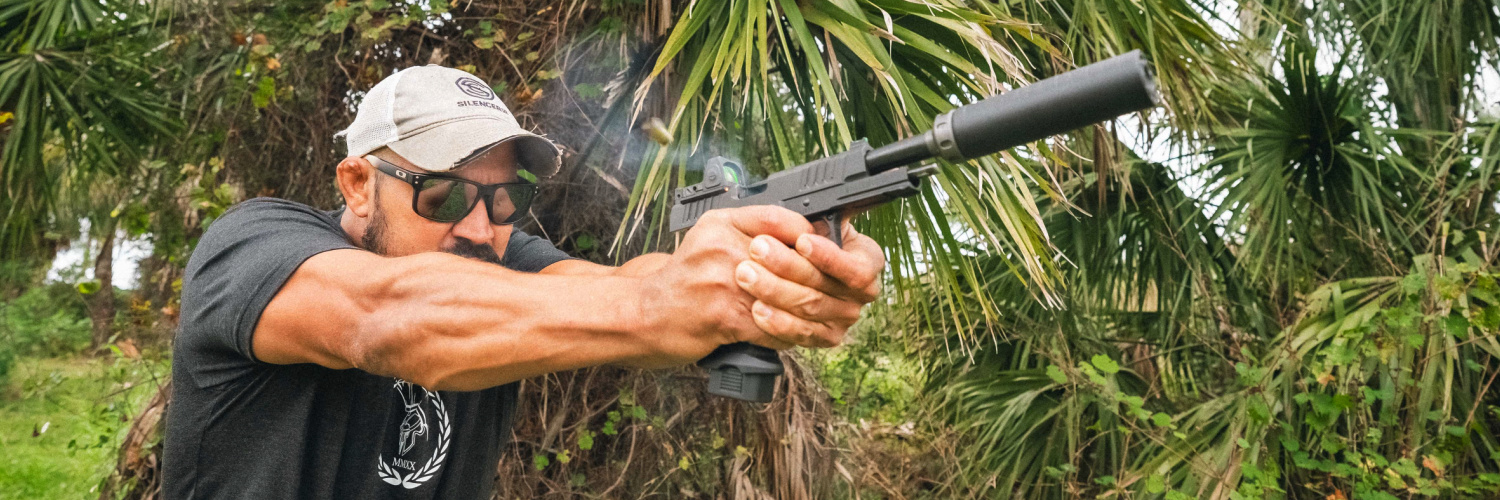
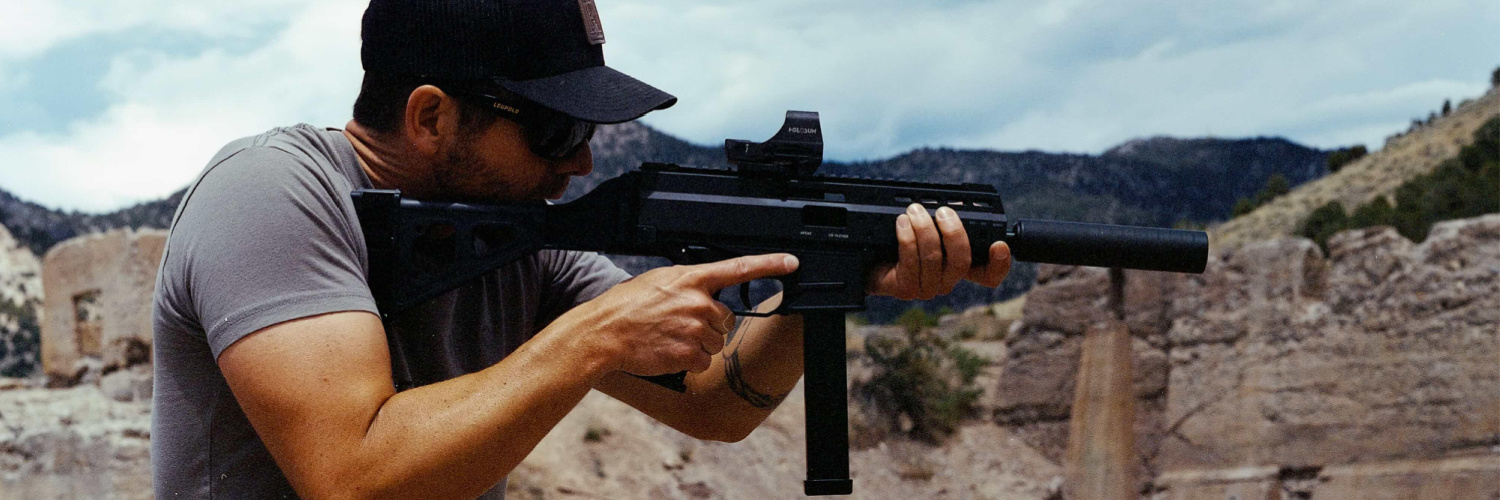
The HK USP Tactical followed in the footprint MK 23 by adding an extended threaded barrel with a rubber O-ring, adjustable trigger, HK distinctive polygonal bore profile and large, easy to see, adjustable target-type sights. Now, beyond the obvious virtues of the HK Tactical and its lineage from the MK 23, the pistols tight tolerances, long service life and very typical HK fit, function and ergonomics make it a perfect choice for pairing with a suppressor, particularly the Silencerco Osprey. The Osprey’s uniquely eccentric design not only sets it apart from other suppressors/silencers in esthetics, but the box shape of the Osprey has the internal baffles running below the barrel of the handgun and brings the top of the suppressor so low that it easily clears factory sights on most handguns. This is a feat that is still problematic for manufactures of round suppressors, largely because a suppressor must have sufficient internal volume, thus external mass, to effectively suppress sound. The more space inside a suppressor for energy to occupy, the greater the sound suppression. And of course the easy answer is to simply make a bigger tube diameter, but this ends up blocking the sights of the weapon. The Osprey’s characteristic eccentric design literally eliminates this problem. Now while this is good, it’s not great especially given that there are so many configurations of sights on factory guns and lighting conditions where those guns are used, but team it up with a tight fitting handgun like the USP Tactical and its low profile slide and high profile target sights and you have a combination that nearly impossible to beat. In fact the USP Tactical and the Osprey work so well together in all aspects, whether this was an intentional design plan or not, but the body of the Osprey is built with a distinctive tombstone shape that so closely resembles the contours of the HK USP Tactical slide that two appear to be built for one another.

Click to see full size image.
An additional benefit of mating the USP Tactical with the Osprey is convenience and manageability. While suppressors are generally special use pieces of equipment, there are times when the weapon, specifically a handgun, needs to be secured or holstered with the suppressor attached after being used. Under the austere conditions of a real-world engagement this needs to be done smoothly, without consuming too much time, compromising safety, or risking the loss of a piece of equipment. This has been a regular problem with standard suppressor designs when the diameter of the suppressor exceeds the outside dimensions of the handgun it is attached to. Additionally, it means that unless you’re carrying your handgun in a loose, sloppy, universal fit rig, you’re not likely going to be able to holster your weapon with the suppressor attached; potentially causing further complications in your already complicated situation. The unique flat-sided box shape of the Osprey, with its baffles running below the barrel of the weapon, allows it to maintain a much smaller profile than other suppressors, while actually reducing more noise. The general dimensions of the USP Tactical slide and frame allow for a smooth fit in-and-out of most holsters. Even more, the Osprey design compliments this so well with the HK USP Tactical; allowing for unobstructed application of lights and lasers that can be mounted to the pistols accessory rails. The Osprey handles like a true actual extension of the USP Tactical.

Click to see full size image.
About the Author:
Wes is an internationally recognized firearms, tactics, and use of force instructor with over 20 years of military & civilian criminal justice experience, as well as significant operational time with both military and law enforcement, tactical operations and protective service organizations. Wes holds specialized instructor certifications from the U.S. Army, the U.S. Marine Corps, Arizona POST, the Smith & Wesson Academy, the Sigarms Academy, the NRA LEAD, and FEMA.
Wes has studied adult education and human performance extensively, and has a broad background in the martial arts, with over 25 years of training, teaching, and full contact fighting experience. Wes is the Founder, President, & General Operating Manager of Khyber Interactive Associates, LLC as well as the 1 Inch to 100 Yards Warrior Conference. Wes holds a Master’s degree in Criminal Justice Administration and an upper level Doctorate in Psychology. Wes is a member of a number of professional associations, including: The International Association of Law Enforcement Firearms Instructors (IALEFI), The International Law Enforcement Educators and Trainers Association (ILEETA), The National Rifle Association (NRA), The National Tactical Officers Association (NTOA), The Military Police Regimental Association (MPRA), and the International Association of Counter Terrorism and Security Professionals (IACTSP).
Wes is also a published author, with numerous articles in various publications such as: SWAT magazine, ASLET “The Trainer”, and The NTOA “Tactical Edge”. Wes authored the bestselling books “Train to Win”, and “Condition to Win” both training psychology/philosophy books focused on law enforcement and military trainers and professionals. Wes’s third book “Inside the Gap” a psychological look at the close quarter’s environment is due out in late 2012.
Company Website:
www.khybertraining.com
www.warrior-conference.com